The final cut of my interview with Andrew Joslin – worthy of noting is the lack of Black Rifle Coffee Co. plugs in this cut as opposed to the raw footage.
Author: Drew
Tireless Guarding
A story I’ve been following for over a year now, Andrew Joslin, a local member of the Michigan National Guard, and his trials and tribulations. This interview is more-or-less an introductory narrative, that which I hope will introduce you to his story so that you will want to come back for more.
Scroll to the bottom for personal testimony of this interview…
So, as far as interviews go, this wasn’t exactly my best work. I laugh a lot, someone (I think both of us, actually) had a runny nose, the heater was running in the corner at full-blast (though that, at least, was a necessity). I have no idea what interviewing style I employed, I’m not even sure that I know what interviewing styles are. My method for getting to know someone through a journalistic prism is the art of the photo story.
The sound seems to be in order and relatively clean, barring the occasional sniffle and… his chairs were incredibly wobbly. You could hear it a few times.
The questions I asked in the beginning were indeed vague. I made my way through it by knowing what answers I wanted to get (being that I know the story after following it for so long), so that made asking the pointed questions even easier. I don’t believe I had much trouble, other than once finding the words.
I didn’t interrupt this time as I usually do (except in the beginning where we were “breaking the ice”), I made a conscious effort to use more, and better, nonverbal cues.
My follow-up questions were occasionally weak, but I don’t know exactly how I could’ve made them stronger in this instance.
Oh lord… he never said his name… whoops…
What would I do differently? Ask him his name.
I think I have learned a few things. Not that I hope to interview anyone ever again, but should the need arise I do believe I can comply with skills gleaned of this exercise.
Well, again, forgot to have him say his name. Suppose that’s one flaw of interviewing someone you know. So after that, the part where he talks initially about why he’s in the Guard.
Quote I expect to end with: “Gun one? Most motivated gun in the section. Hands down – I will fight anyone to this day about that.”
JRN.340 Audio/Article review
In this story, produced by NPR in a partnership with WBUR in Maine, called “‘Church of Safe Injection’ Offers Needles, Naloxone to Prevent Opioid Overdoses” it is discussed that this organization known as the “Church of Safe Injection” is stepping in to provide clean equipment used for heroine injection.
Their goal of preventing diseases and overdoses in the stead of what they call a failure on the part of the healthcare system is aided by the organization’s many volunteers, who, in many instances, have suffered first-hand experience with what they are fighting against.
This story takes place in Maine back in 2019, simpler times by all accounts, and the story starts by using Nat audio from the where the “Church” is handing out supplies – audio of a bus starting up, as the folding table of supplies is huddled in a Bangor, MA. bus stop.
Then, a narrator (Deborah Becker) lays out the scene. Next, they cut directly to an interview of one of the volunteers, Dave Carvagio . He offers some interesting sound bites, and they transition directly to the next point of emphasis using his audio and, following more narration, another sound bite from Dave.
They speak briefly about the police officers in Bangor, and the laws surrounding the legality of what they are doing, then the audio cuts to a descriptive narration of the 5W’s and one H, the real meat of the story and follow up that narration with why Dave personally undertakes this illegal-yet-justifiable burden.
Following Dave’s interview is the interview of Police Sgt. Wade Betters who gives a brief synopsis on the law, how these people are breaking it, but why they haven’t arrested anyone yet. After which they again use the bus stop Nat audio to connect the next interviewee to the organization.
After a brief summation of quotes and opinions, they cut to Nat audio and an interview of one Kandice Child, a volunteer for the organization, who is rummaging through her box of supplies. You can really hear the boxes and assorted items being milled around, as well as clean audio of her speaking. A very nice job of either layering audio, or perhaps lucky mic placement.
They continue with Child rummaging through boxes as she speaks to two young men who are looking for supplies, not necessarily A-roll audio but more like B-roll Nat audio which gives you tremendous context.
Next, you hear the reporter and Kandice Child climbing up the stairs of an apartment building as Nat audio as the narrator describes the scene. Kandice Child and an unidentified, 36 year-old drug user exchange dirty needles for Child’s clean needles and you again hear the rummaging B-roll.
They finish with an interview of the founder of the “Church of Safe Injection” with the bus B-roll behind it, seemingly a driving force that is almost metaphorical for the volunteer work his organization undertakes. This is essentially the end of the audio, and they play NPR’s signature music to sound the end of the clip.
Now on to the comparison of the two formats – in the audio version, they use more of a soft lead, describing the setting more meticulously but not necessarily giving the details directly as the story seems to.
The interview with Dave Carvagio seems more abrupt as there is no soft introduction, no driving external force to set up his interview. And after listening to the story first, it simply seems out of place.
The next few paragraphs seem to align with their counterparts in the audio, as the interview with the police sergeant was all A-roll.
It should be noted that there are many instances of differing sentence structure, and a plethora of information left out of the written piece as it is easier to listen to something than read it, so the audio piece is afforded far more leniency on detail.
The part in the article where they get to Kandice Child seems lacking, as she is not introduced with as much background as the audio gives. The rummaging in the boxes is missed and a worthy addition.
The article adds a bit about how one volunteer with Child demonstrates how to use Naloxone where in the audio it is left out for some reason. The audio also leaves out a quote from a woman in the apartment, so two things right back-to-back that are in the article and not the audio.
That’s basically it for differences. I do think I preferred the audio version, this was my first audio story, but I really enjoyed it. It was more memorable for me, as I can relate the quotes to different voices, different sounds, etc.
Overall, not a terrible way to spend a Saturday..
JRN.340 Introductory Post
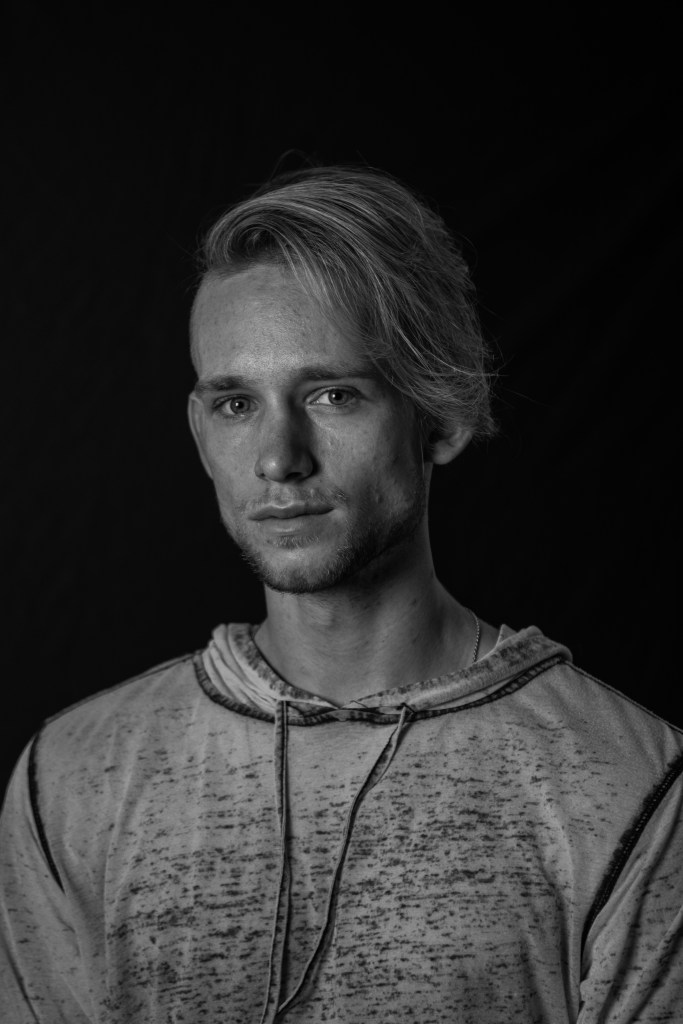
To my first-time viewers, I am Drew, and this is for my JRN.340 class. I’m a photojournalism student at CMU, a published author as well as lead guitarist and frontman for a local band. Yes, playing and singing is tough, I would agree that you can only devote 100% of your attention to anything. So, if one plays poorly, it leaves room to sing poorly as well.
I am a wildlife/landscape/nature photographer by choice; I can’t ever get enough of the outdoors. I have photographed everything from wild bears (much too closely, at that) to the elusive Kirtland’s warbler.
On top of being a grit and spit outdoorsman, I’m also a huge nerd. Odd combination, I know. One time, while doing a self-portrait shoot with my movie-quality lightsaber back in the woods a ways, a skunk stumbled its way into my shoot and made a big stink about the whole thing. Some beings just aren’t as considerate as they really should be, especially when their evolutionary advantage is death by smell. I have never run so fast in my life.
Well, that likely is more than enough of an introduction, I wish you well.
-Drew
Education from a Distance
JRN.422 COVID story
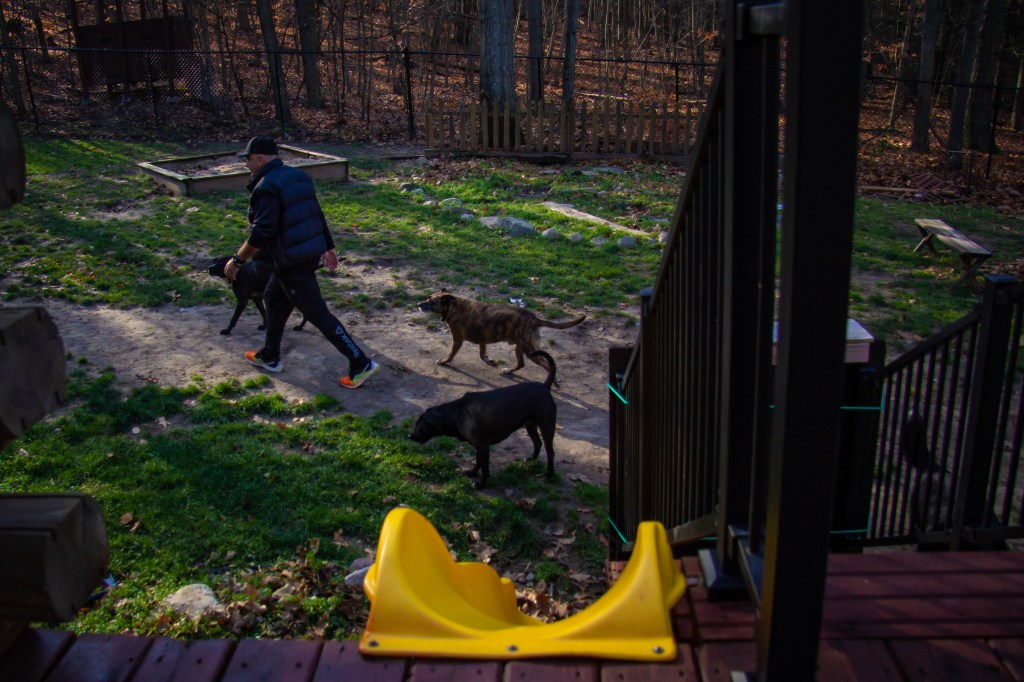
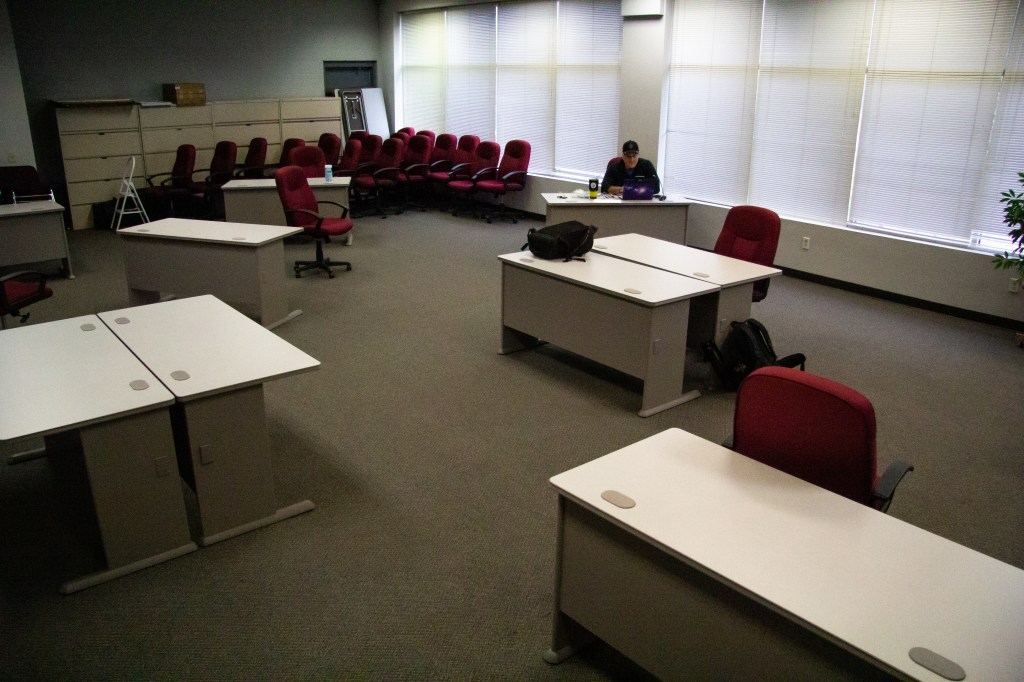
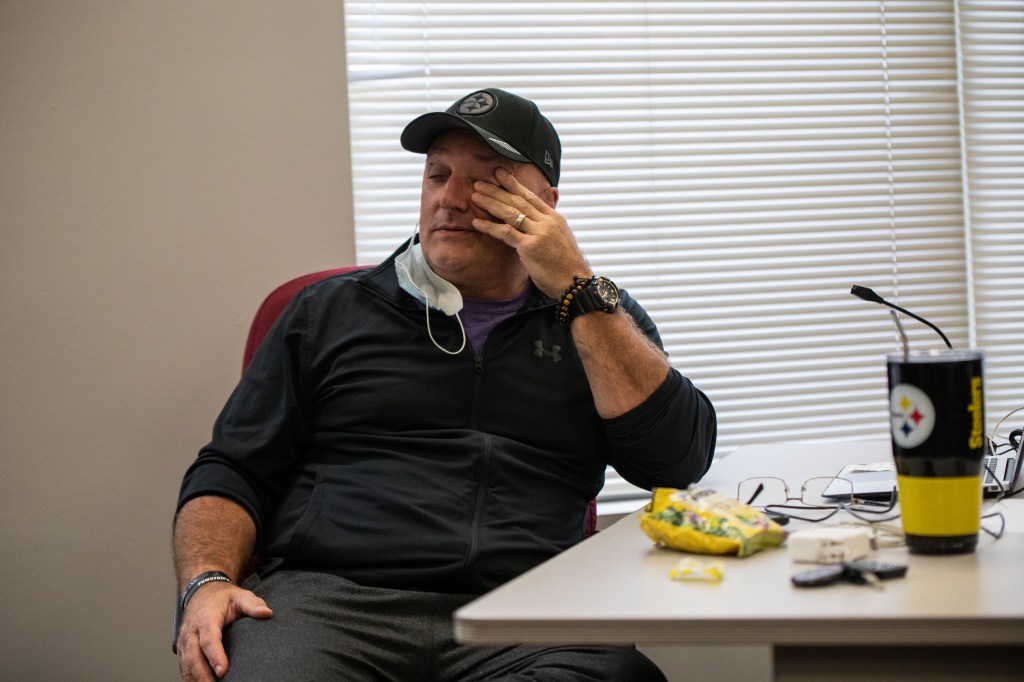
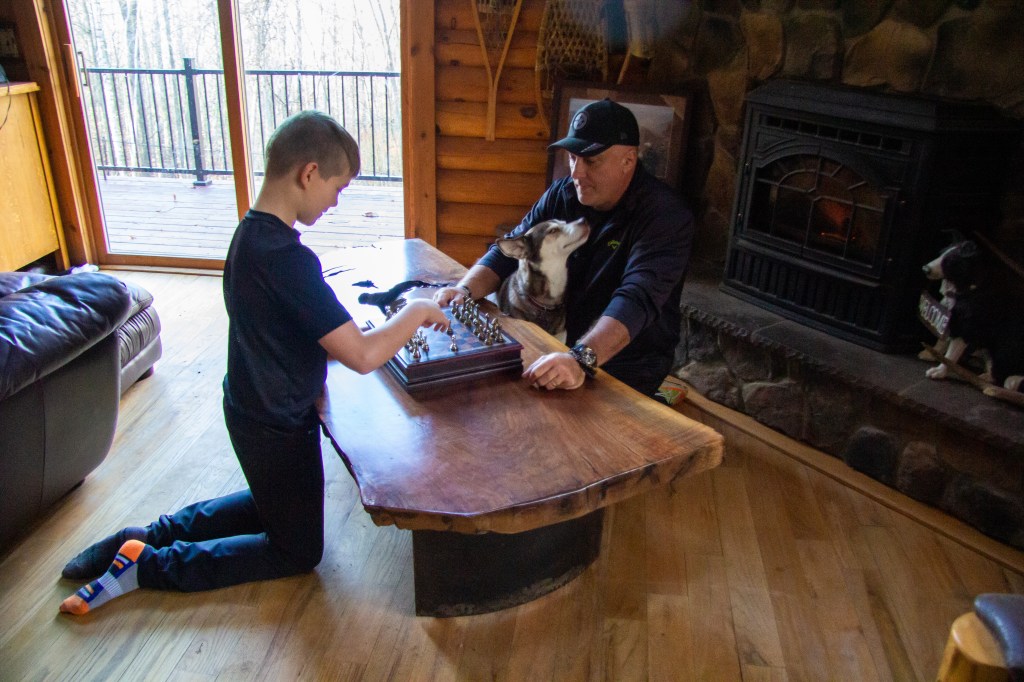
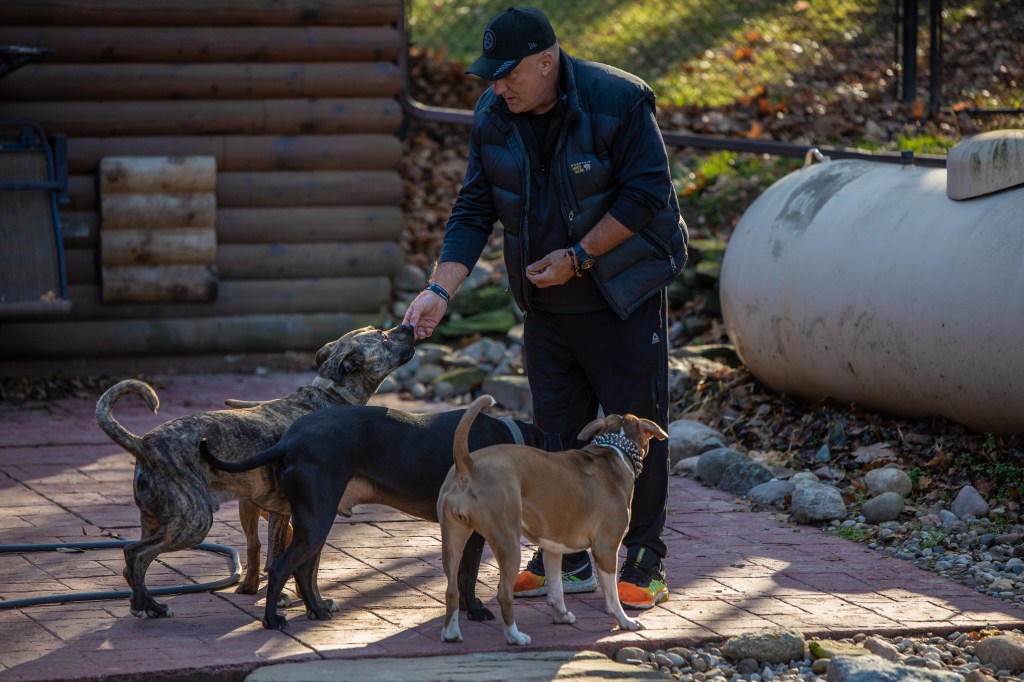
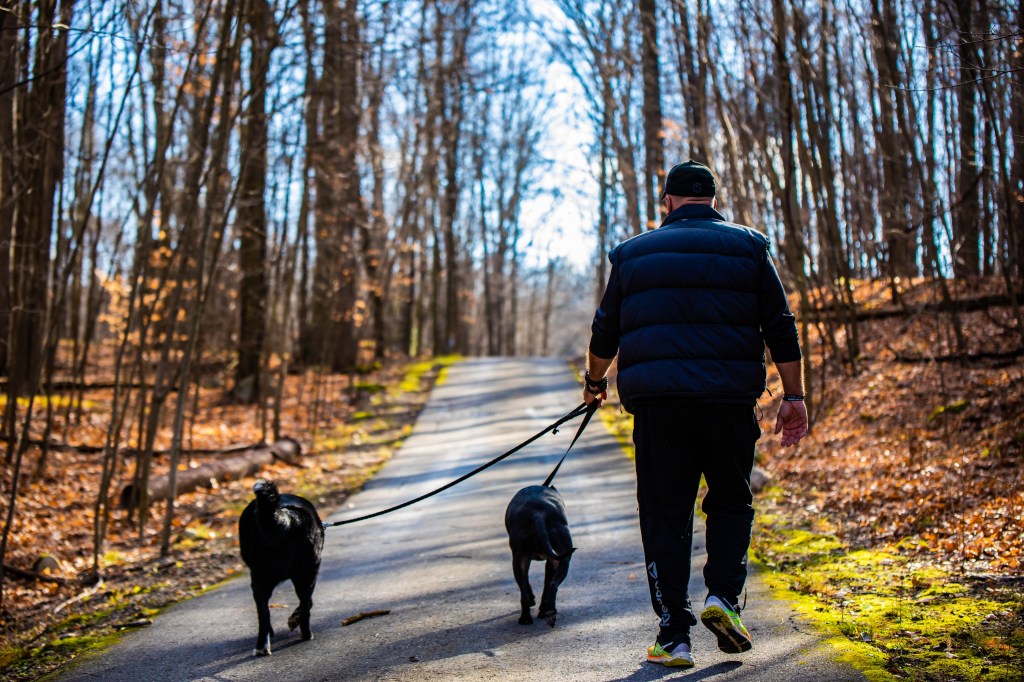
As an educator, Jay Gross is the head of the Teachers’ Union and the Head of English. He’s spoken around the country on a variety of topics including technology in education and the importance of relationship-building as an educator. He has nine dogs – all rescues – and three kids – whom he and his wife adopted.
Jay has been an educator at Shepherd High school for over 21 years, teaching kids everything from English to public speaking in a variety of classes. But after all of his years of dedication, with the entrance of COVID-19 and the departure of face-to-face learning, the medium of which Jay thrives, Jay admits that he quickly realized he couldn’t do it anymore; “It’s the kids that make it worthwhile – seeing the realization on their faces as they come to understand Frankenstein’s monster or Hamlet… with my kids, I can put up with anything.”
The stresses of online school led him to officially retire Wednesday, Nov. 18. “It’s just so impersonal… I can’t do it, dude,” Jay revealed to me after teaching what would be one of his last class sessions Saturday, Nov. 14.
He spends what time he can at home, back in the woods with his loved ones; “This is my safe space – I mean look around. I love it out here.”
This project was easy enough – finding a subject who has been effected by COVID is an easy task, but finding someone who has a meaningful story because of it was more challenging. Or perhaps I’m just picky. The only real challenge that I faced during this project was coming home to my dog after spending a day with nine new dogs, my boy seemed to get rather upset at me after he was able to discern all the new smells. And if that’s the only problem you face while shooting, that means it went pretty smoothly.
After the Midland project was finalized, I had less than two weeks to find a subject and get the story done – I hadn’t even given the COVID story much thought because the Midland project had my full attention for so long. So, needless to say, this was a welcome break from tradition, a healthy change-of-pace.
I only got to go out a handful of times – Jay is a very busy man, especially now – and then he retired the day after I went out last; being my favorite teacher I’ve ever had, it hurt me to see him suffering while doing what he loved.
Rallying around the Red and Blue
JRN.422 daily assignment
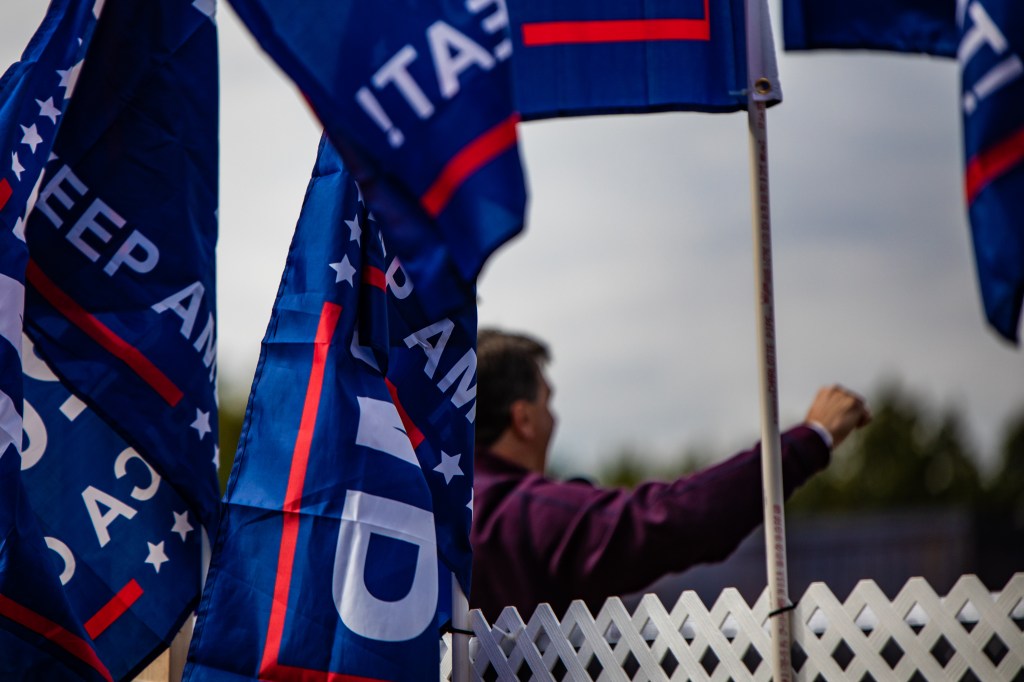
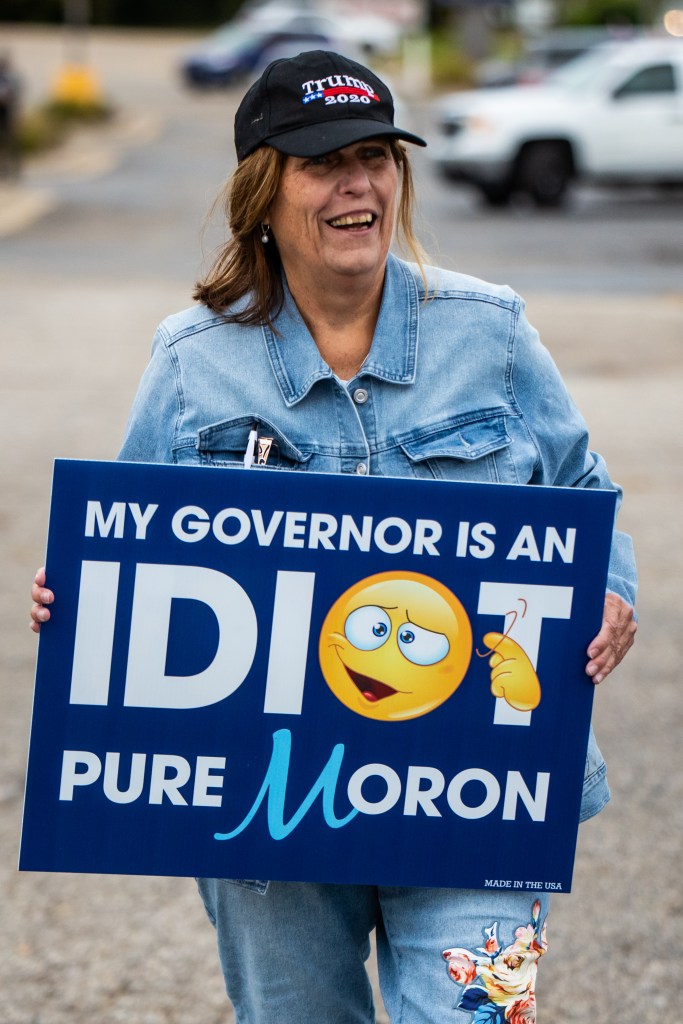
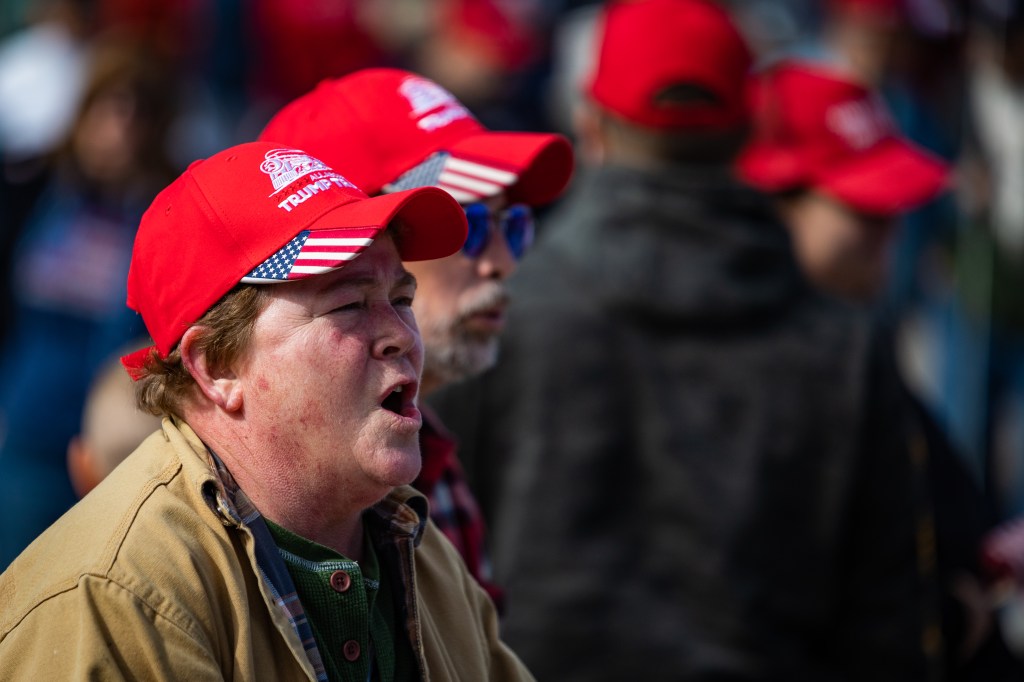
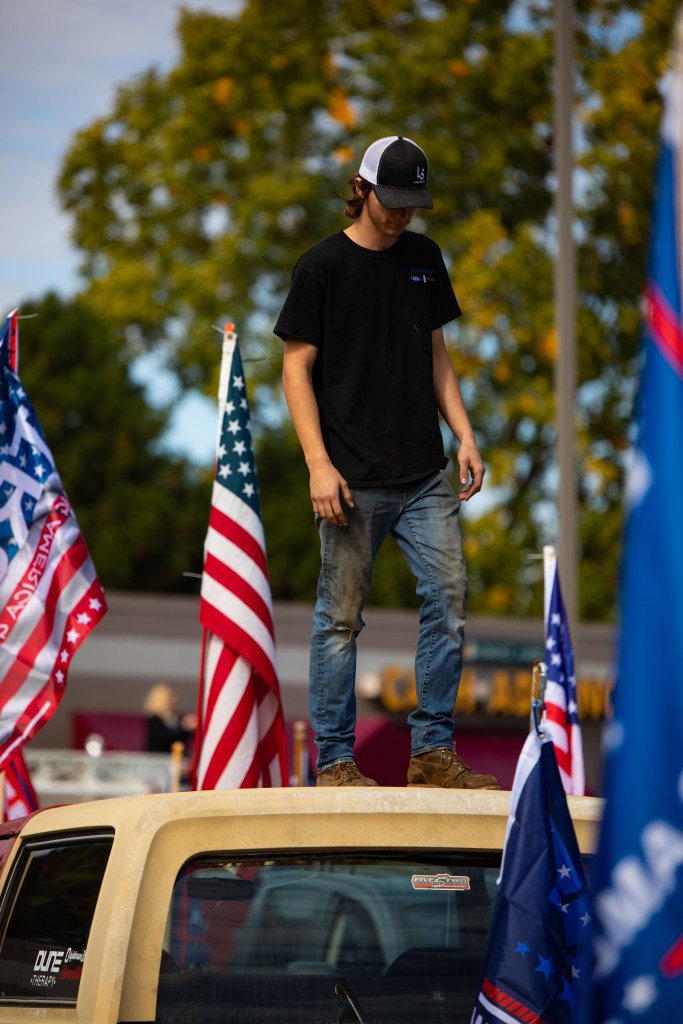
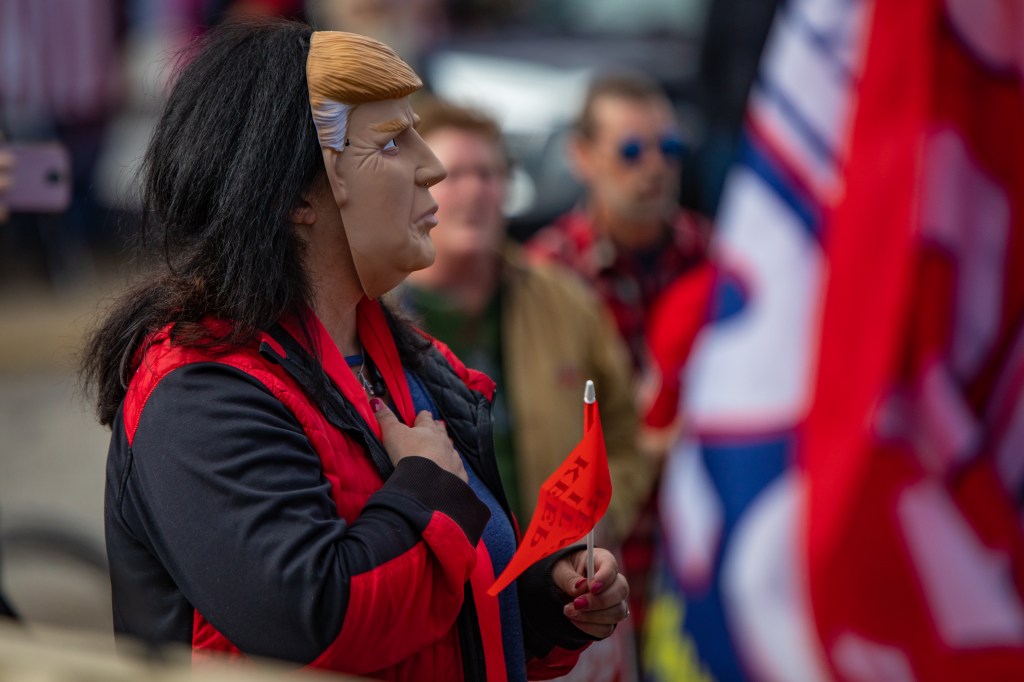
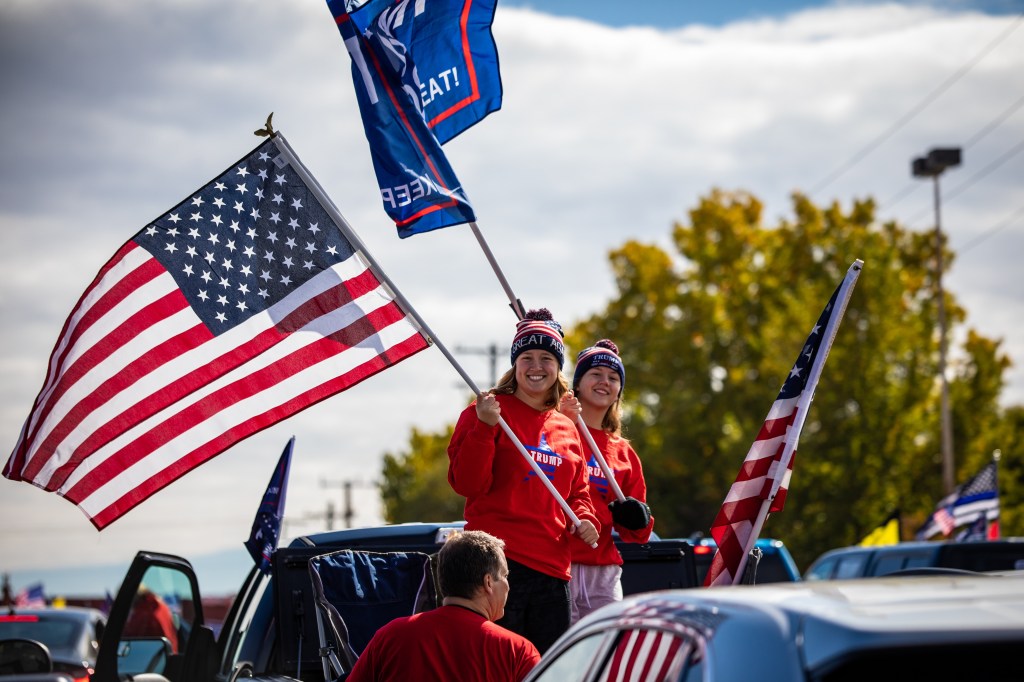
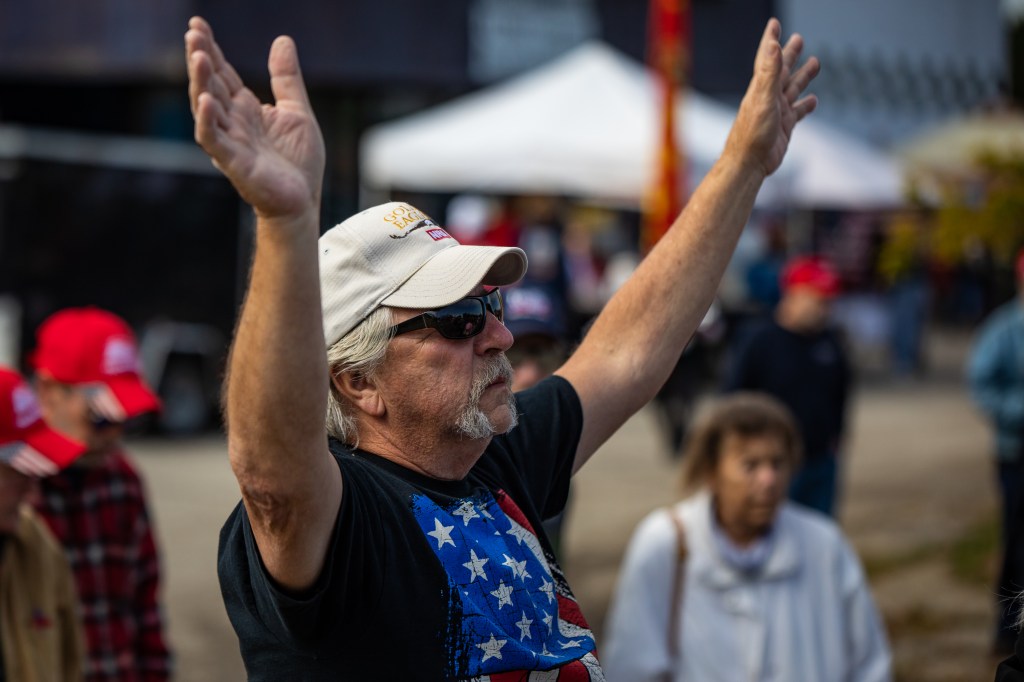
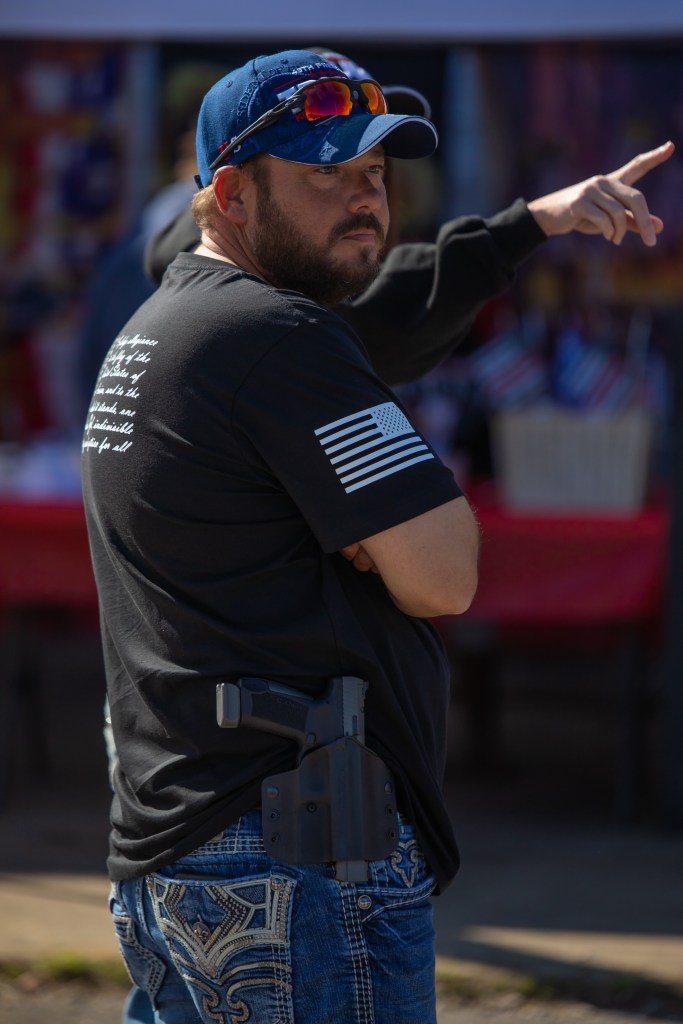
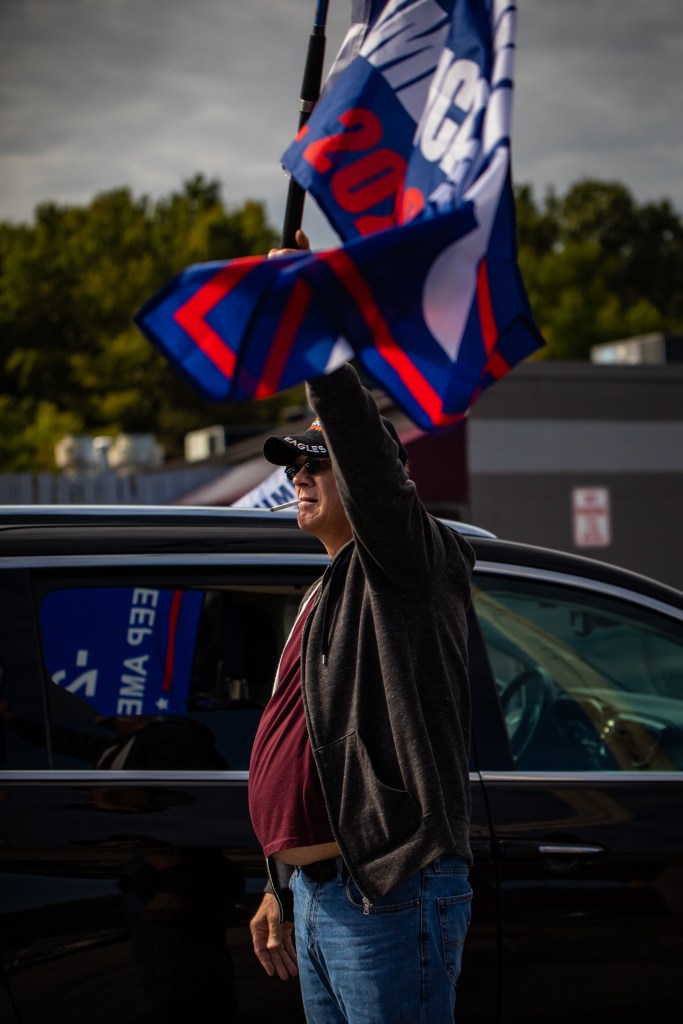
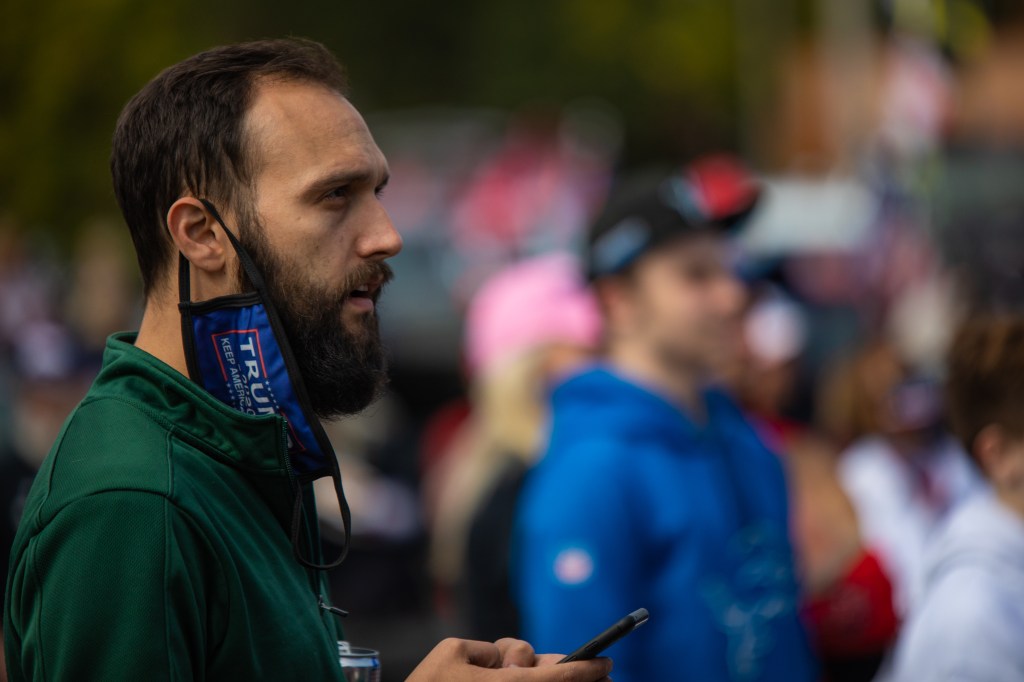
As one of the key rural areas surrounding Lansing, Howell has been a battleground between the colors of Red and Blue. This rally, doubling as a “Back the Blue” counter-protest, began slowly as the cars rolled into the nearly vacant parking lot. The supporters of the cause began to circulate, purchasing memorabilia such as flags, signs, shirts, and even books. Shortly thereafter, the music began to rumble, vibrating off of the car windows in deafening assent.
Passers by honking their assent seemingly in time with the beat bolstered the morale of the protestors as the air seemed to hum with anticipation for the upcoming speeches. In the distance, a blanket drapes over the side of a merchant tent, President Trump’s visage poorly realized, improved upon with bulging muscles and a distinct lack of wrinkles, a body that would make Arnold Schwarzenegger even a bit jealous. In his hands, a heavy machine gun with a rocket propelled grenade stuck in the end for cinematic effect, or, more accurately, comedic.
Following the insults hurled in the general direction of Joe Biden and “Fake News,” the speakers would always end with that classic hint of propaganda to keep the blood flowing.
This particular project was not fun. I am very much not a fan of large groups of people, especially now, as this particular group was entirely naked upon the face – mask-less. I stayed a good distance segregated from others and furthermore, my camera seemed to part the crowds as it was. So aside from my apprehensions regarding crowds, it was alright. I moved rather fluidly through the crowds to capture different images from different angles as well as compositions.
This project was easier than the others as it was just the one-day feature project. I think the hardest part of capturing this story was driving to the event – my gas tank took a major hit – but I believe I learned a good amount about how to photograph these types of events.
High Plains Ranchers
A snapshot of the hard land and the harder people that live on it.
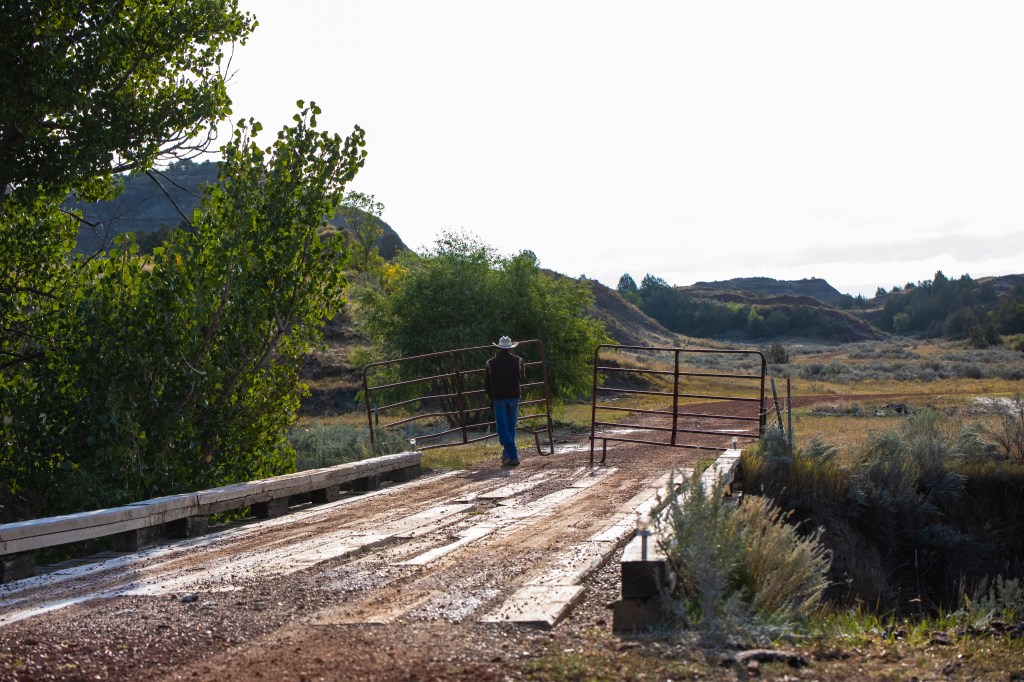
Monty Carson opens the gate one early morning across Beicegel Creek to his cattle near Grassy Butte, ND, Tuesday, Sept. 8, 2020. Monty has been living on the ranch all of his life, as it’s been in their family since 1950. 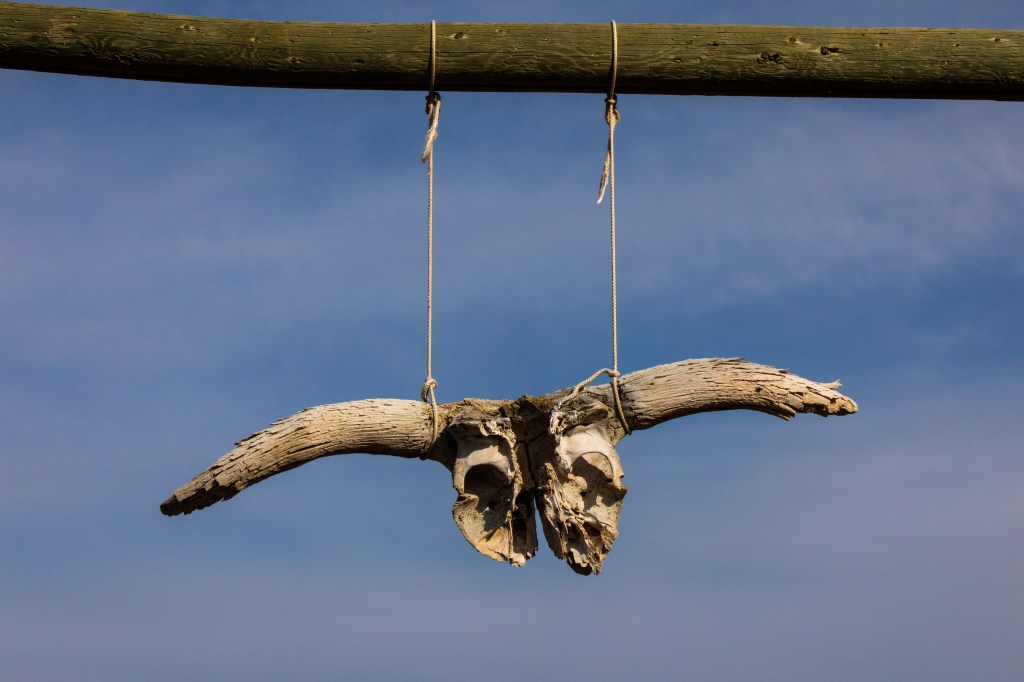
An old skull hangs from a crossbar above the Carson arena Friday, Sept. 11, 2020. 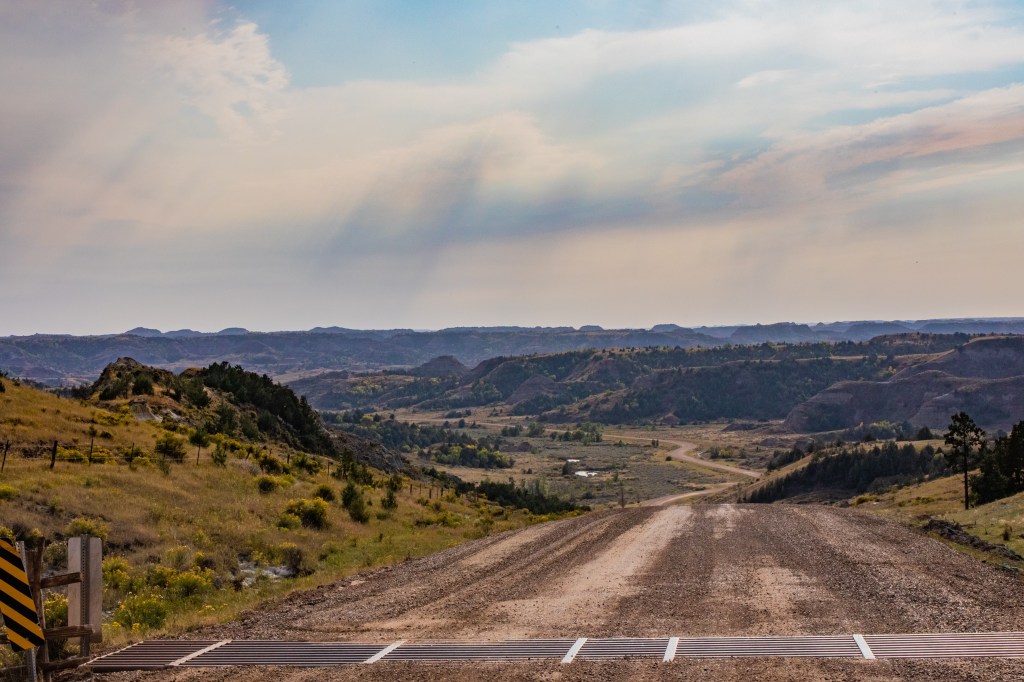
The view of Beicegel Creek valley as I entered the Carson Ranch Friday, Sept. 11, 2020. The Carson’s own about 4,000 acres and lease a few thousand more from the United States government. 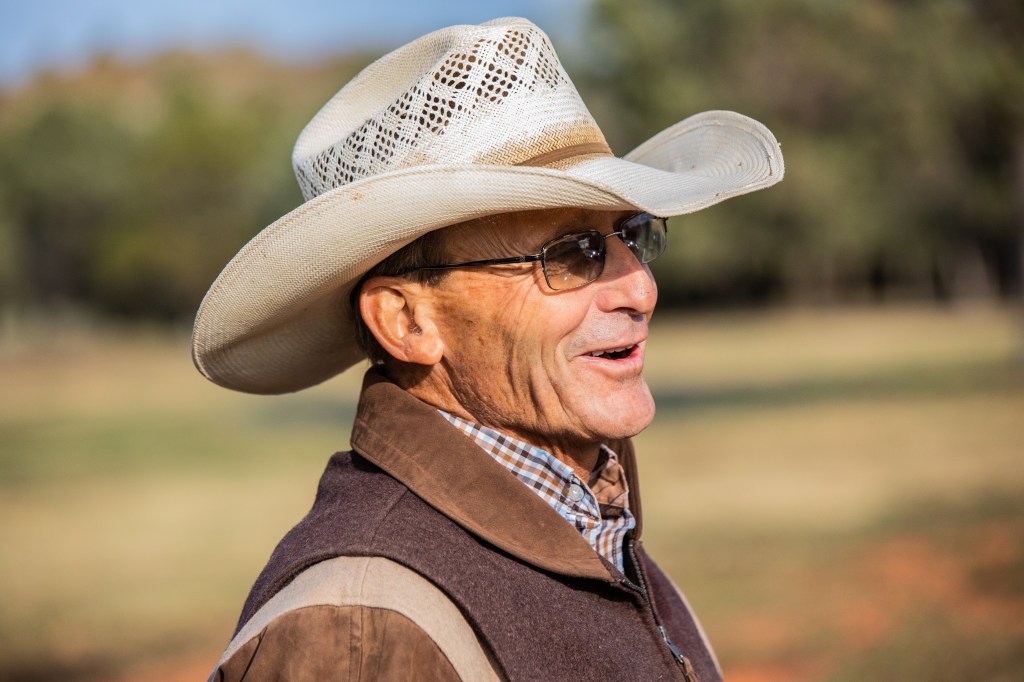
Monty Carson laughs at the camera pointed at him Tuesday, Sept. 8, 2020. “You’re gonna need a few thousand to get a good one of me,” he said. 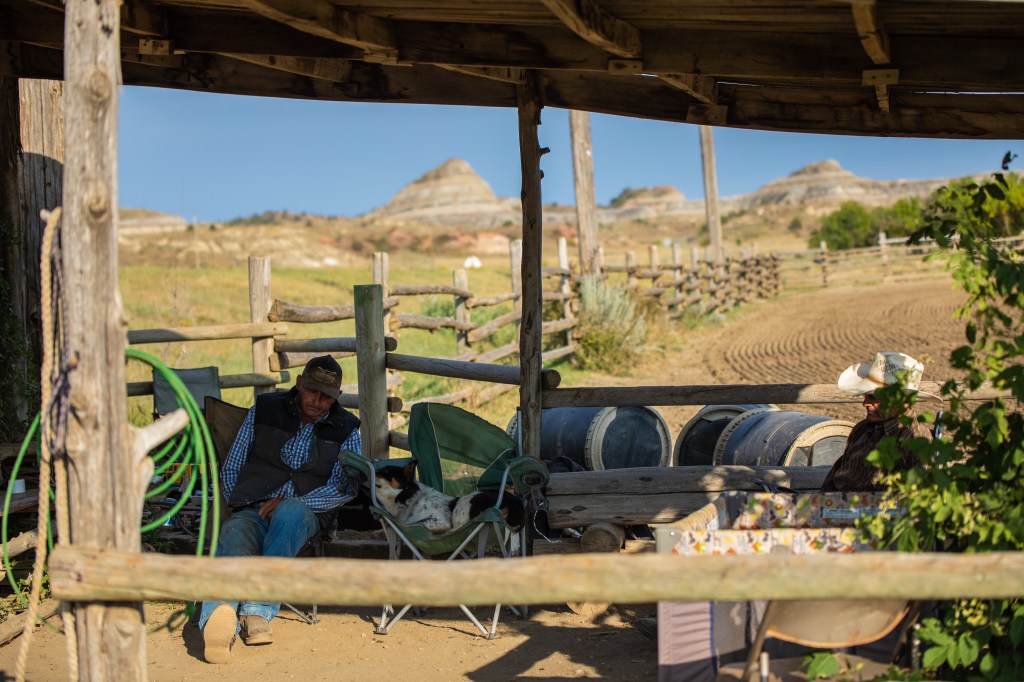
Monty Carson (right) and his brother Ron Carson (left) relax in “the garden” after a hard hour of roping practice. Ron and Monty are co-owners of the Carson ranch. 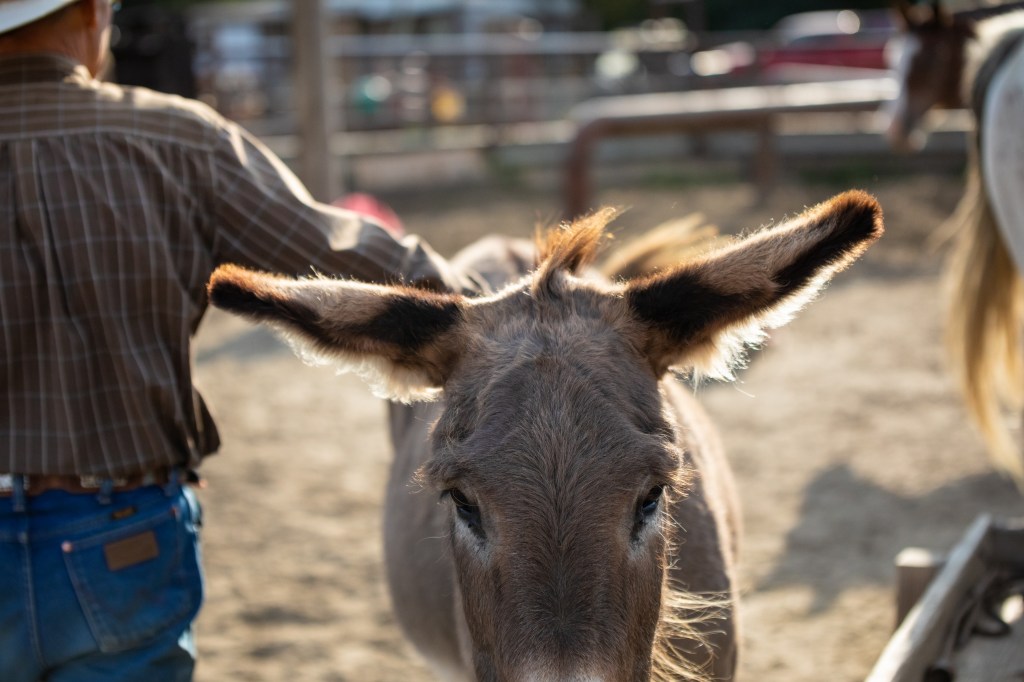
Monty pets his donkey, Moses, after a long day of working with calves on the Carson ranch Friday, Sept. 11, 2020. Moses is 20 years old, and while most donkeys are kept on the pasture to deter predators, Moses, Monty lamented, “is really only good for eating treats.” 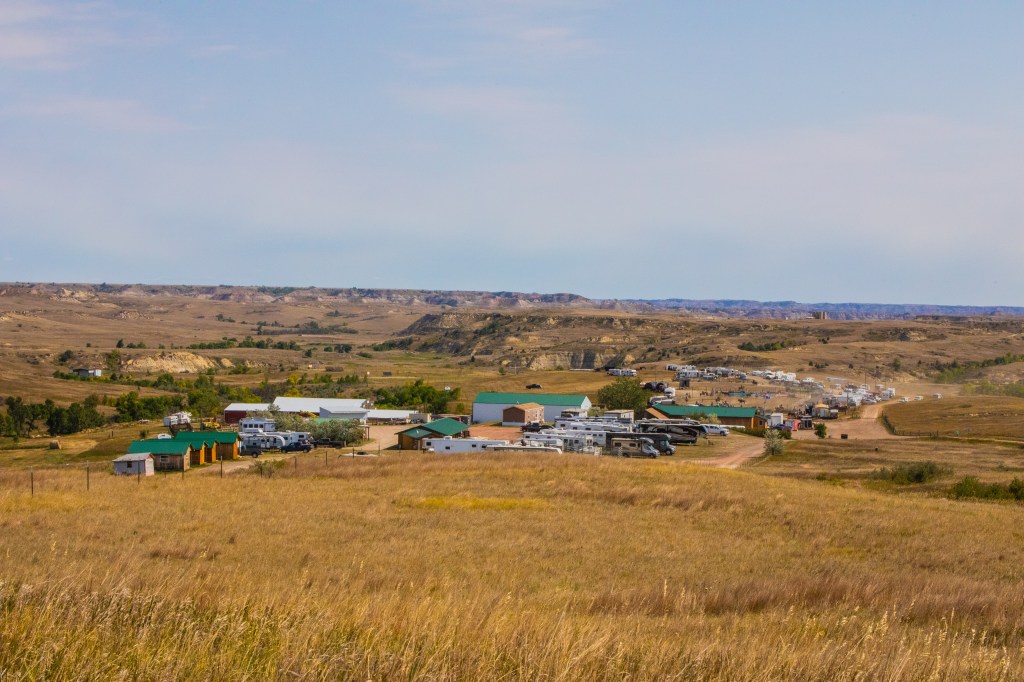
The view from above the Buffalo Gap Guest Ranch where the Carsons often put on calf roping events Sunday, Sept. 6, 2020. “We put on around a dozen events a season and send our calves to around 20 more,” said Monty. 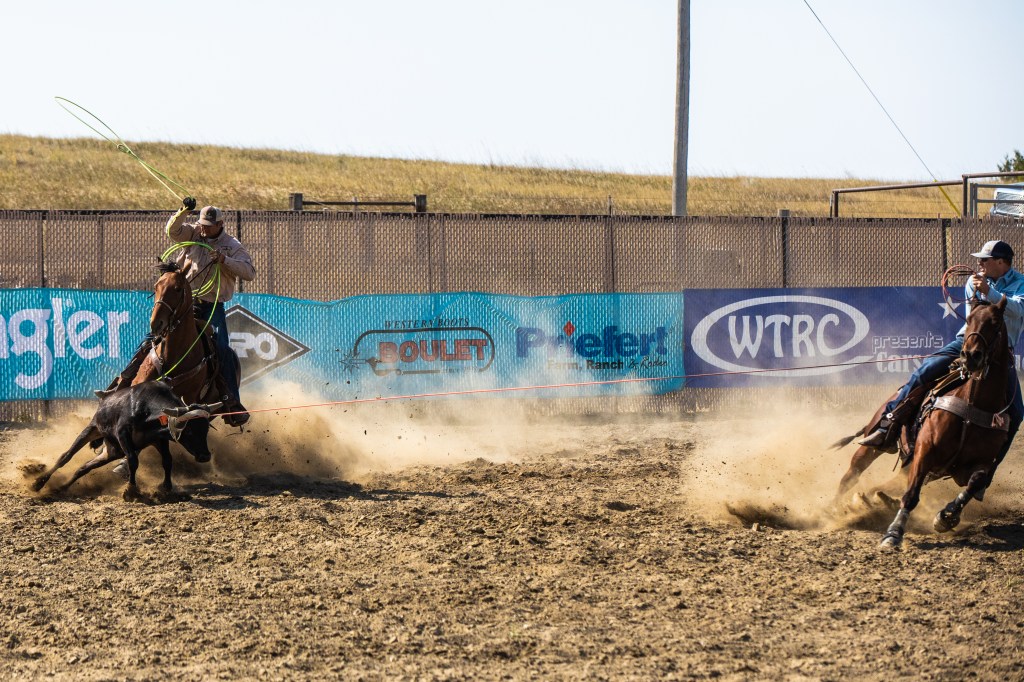
Lane Carson (right) pulls a steer towards him so that his partner can rope its feet during a team roping event at the Buffalo Gap Guest Ranch Sunday, Sept. 6, 2020. Team roping requires participants to work together to to immobilize a wily steer, and the time it takes to do so will affect your score. 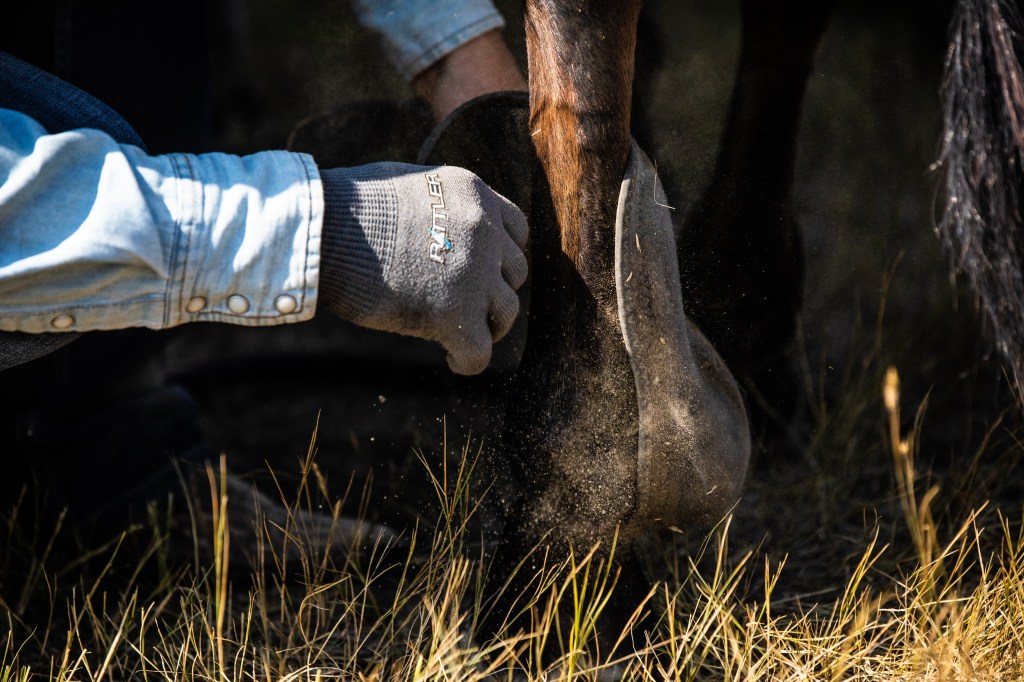
Lane removes his horses boots after his roping events are completed at Buffalo Gap Sunday, Sept. 6, 2020. A horses boots help protect their ankles from being kicked by their own feet when maneuvering at high speeds. 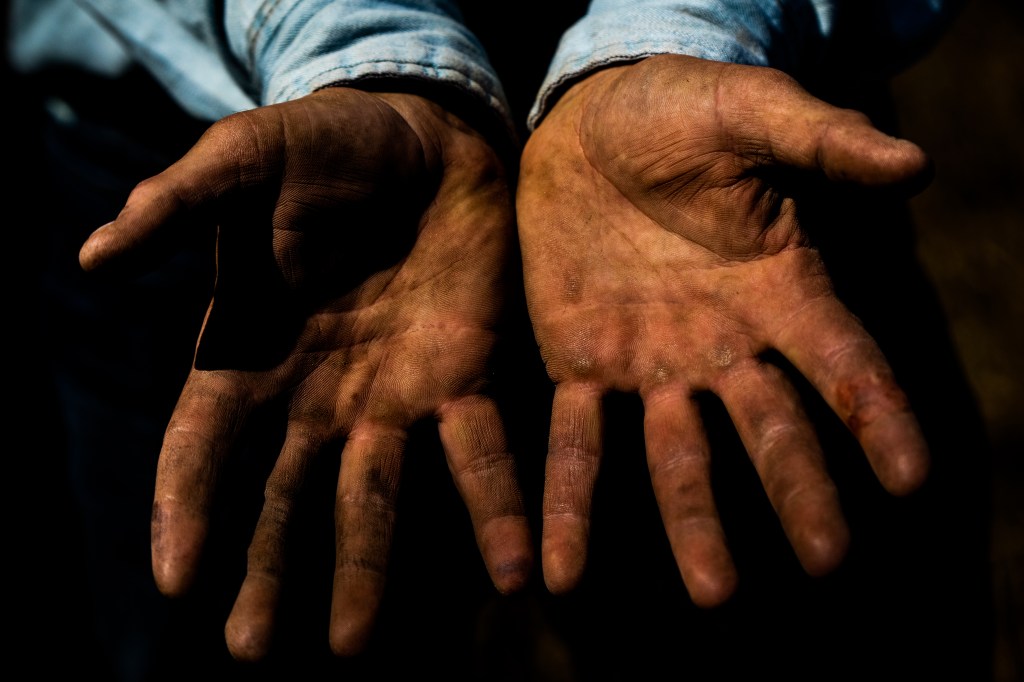
A cowboy’s hands tell no lies. This portrait of Lane Carson’s hands Sunday, Sept. 6, 2020, is a testament to that fact. 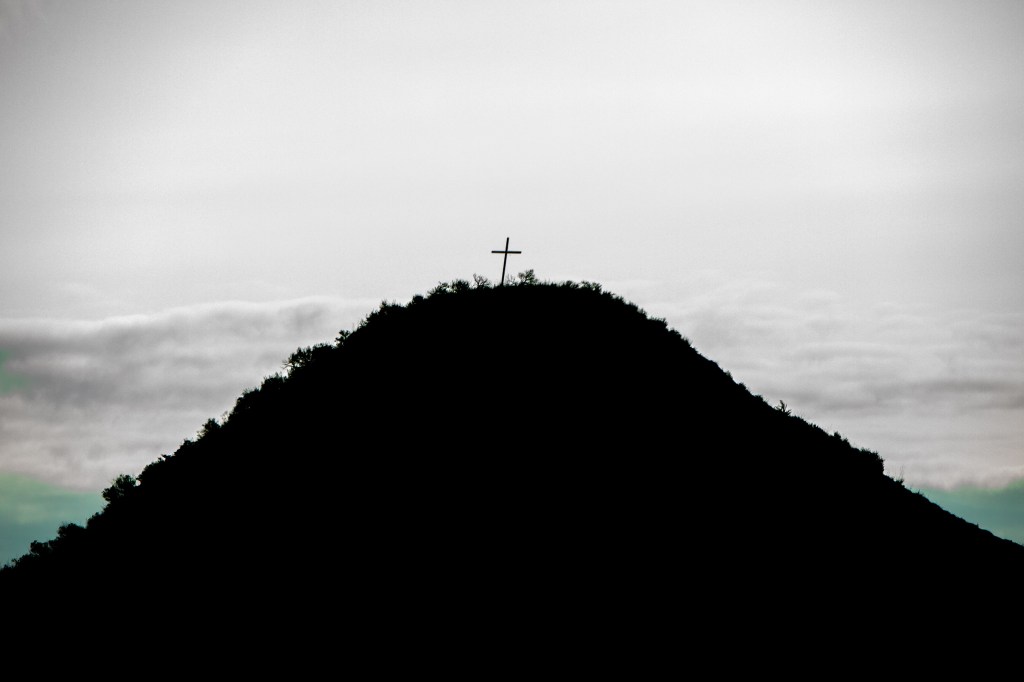
An old cross adorns one of the many hills on the 15 mile track to the Carson ranch Wednesday, Sept. 9, 2020.
The sun lazily climbs the distant hills, painting its pastel oranges and yellows across the rugged brown cliffs and scrub brush that dot the landscape. The air is crisp and the wind biting, a sharp frost crunches beneath my feet as I make my way to the downed fence that Monty Carson has already been working on for two hours now. Where the Carson ranch is located, there aren’t many fences. All of the cattle are branded with their flying-C logo just to make sure that what is theirs stays theirs.
Raising the fencepost driver above his bleached straw hat, he pounds it into the wooden pole repeatedly, driving it down into the hard rocky earth. The ranch sits on 4,000 acres of owned land and a few thousand more leased from the U.S. government. “There are no farmers here,” says Monty “the badlands make it tough to do just about anything.”
The Carsons have been ranching in the Beicegel Creek valley since 1950 and the now Co-owners, Ron and Monty, their whole lives. They raise cattle that they pasture on their massive expanse of land, and they use their steer calves for rodeo events. They also own a rodeo production company, Carson Productions, that they use to put on around a dozen events per season.
“It’s honest livin’, ranching like we do. Or so I’ve been told. Don’t know much else,” Monty said, looking toward the sunrise.
The ranchers in North Dakota have a culture to them: they are a hard, resilient, and distant in terms of relationships and actual distance from other people. To get in with them, I first had to find someone in the city who had family on a ranch. My ranch family was very kind, though COVID kept us distant as well. Aside from hiking their property and remembering to pick my jaw up off the floor, I spent my time watching them ride, feed cattle, and just talk about good ‘ole country livin’.
Grudge Match
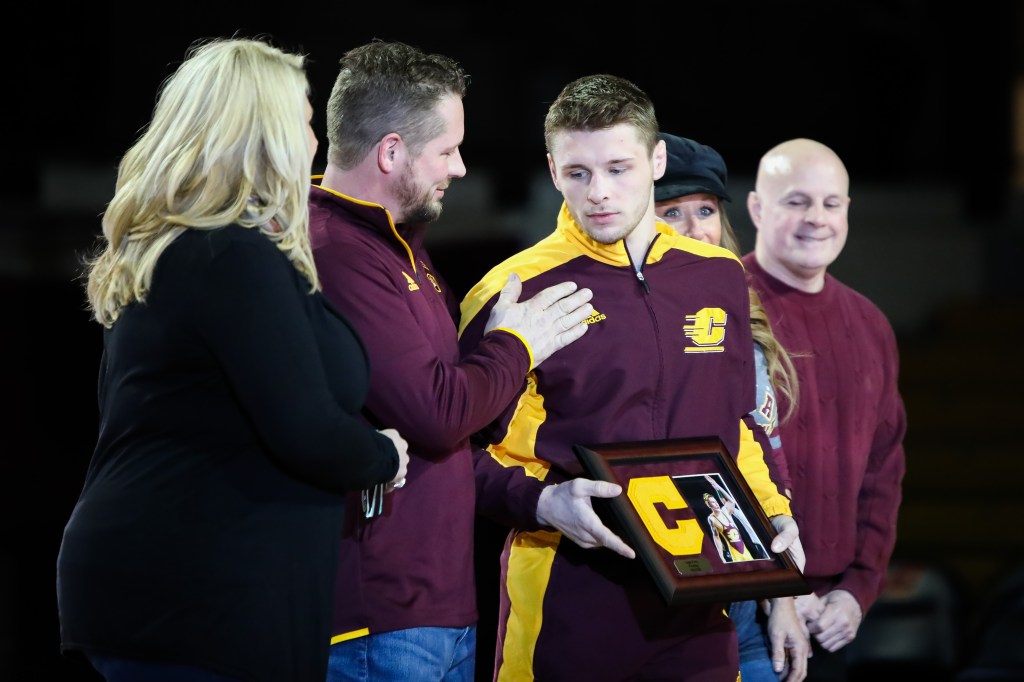
Taylor senior Logan Parks after receiving his award on senior night for four years of hard work and dedication to the team Friday, Feb. 21, 2020 in McGuirk Arena. After winning his match he improved his overall collegiate record to 73-57 and is currently ranked 16th nationally.
Central Michigan hosted their rival Michigan State in McGuirk Arena this past Friday. Being the last home meet of CMU’s season, it was senior night for the lone senior, Logan Parks. His family was in attendance and escorted him to center mat to accept his award with flowers and a wide assortment of grins as the spotlight shone down. Logan seemed to have a far-off look, however, mentally preparing to face an opponent he hadn’t beaten in three bouts.
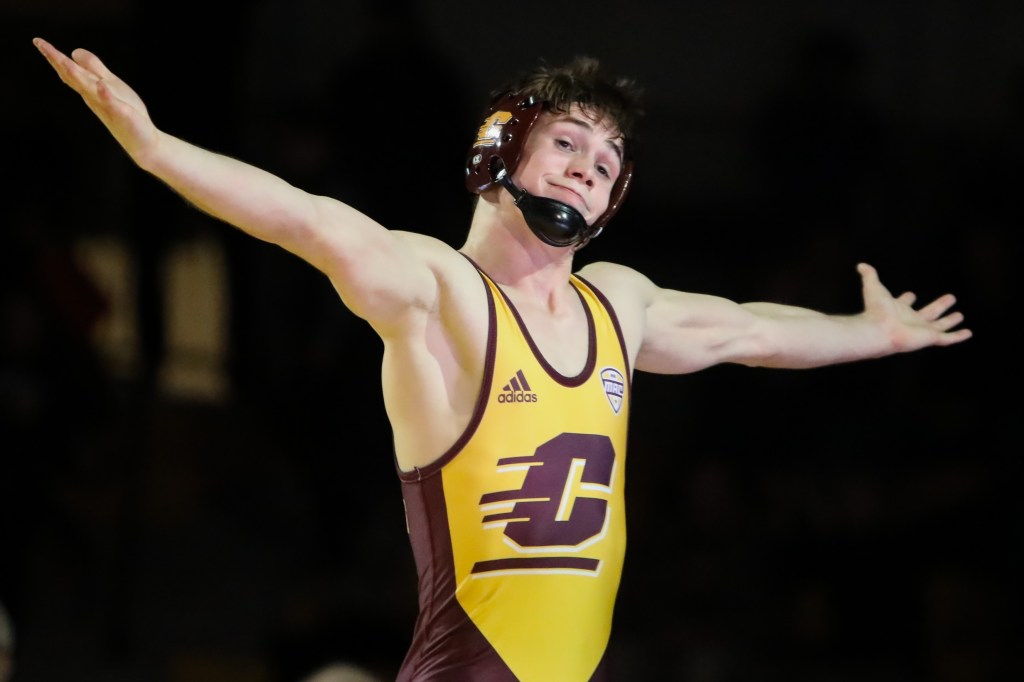
Granger, Ind. redshirt junior Drew Hildebrandt celebrates after his first-round pin of MSU’s Logan Griffin Friday. The win improved Hildebrandt’s record to 28-3 and helped CMU secure a 21-15 win.
Shortly thereafter the matches began, the first of which dig th ranked Drew Hildebrandt pinned his opponent in the first round. Central jumped out to an early lead of 12-0 and increased that to 15-3 after just five matches. The Spartans then rallied in the next three bouts and tied it at 15 before CMU pulled away in the final two bouts with the help of redshirt junior Landon Pelham and fourth ranked redshirt junior Matt Stencel. The win was CMU’s 6th consecutive dual victory to finish the season strong.
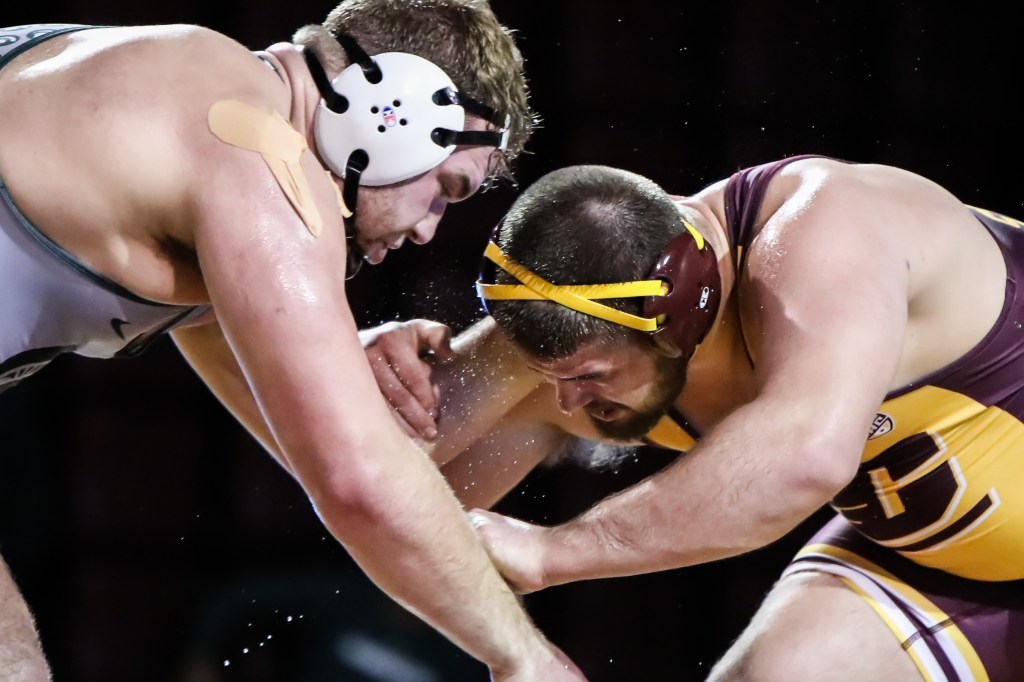
Oregon, Ohio redshirt junior Matt Stencel (right) outworks MSU’s Christian Rebottaro in a 4-1 match. Stencel improved his record to 26-4 and has won nine straight matches to be ranked fourth in the nation.
While it may be easy enough to snap some pictures at sporting events, shooting a wrestling meet in a professional capacity requires an incredible amount of luck that the meet unfolds in your general direction, that you anticipate the action and look always for reaction shots in the crowd, on the bench, etc. I have shot many sporting events before, but this particular wrestling meet I was pressed to get the best shots that I possibly could. Thus, I was always working the shot and adjusting myself and my camera on my little corner of mat to find the best shot.
 Drew Travis Photography